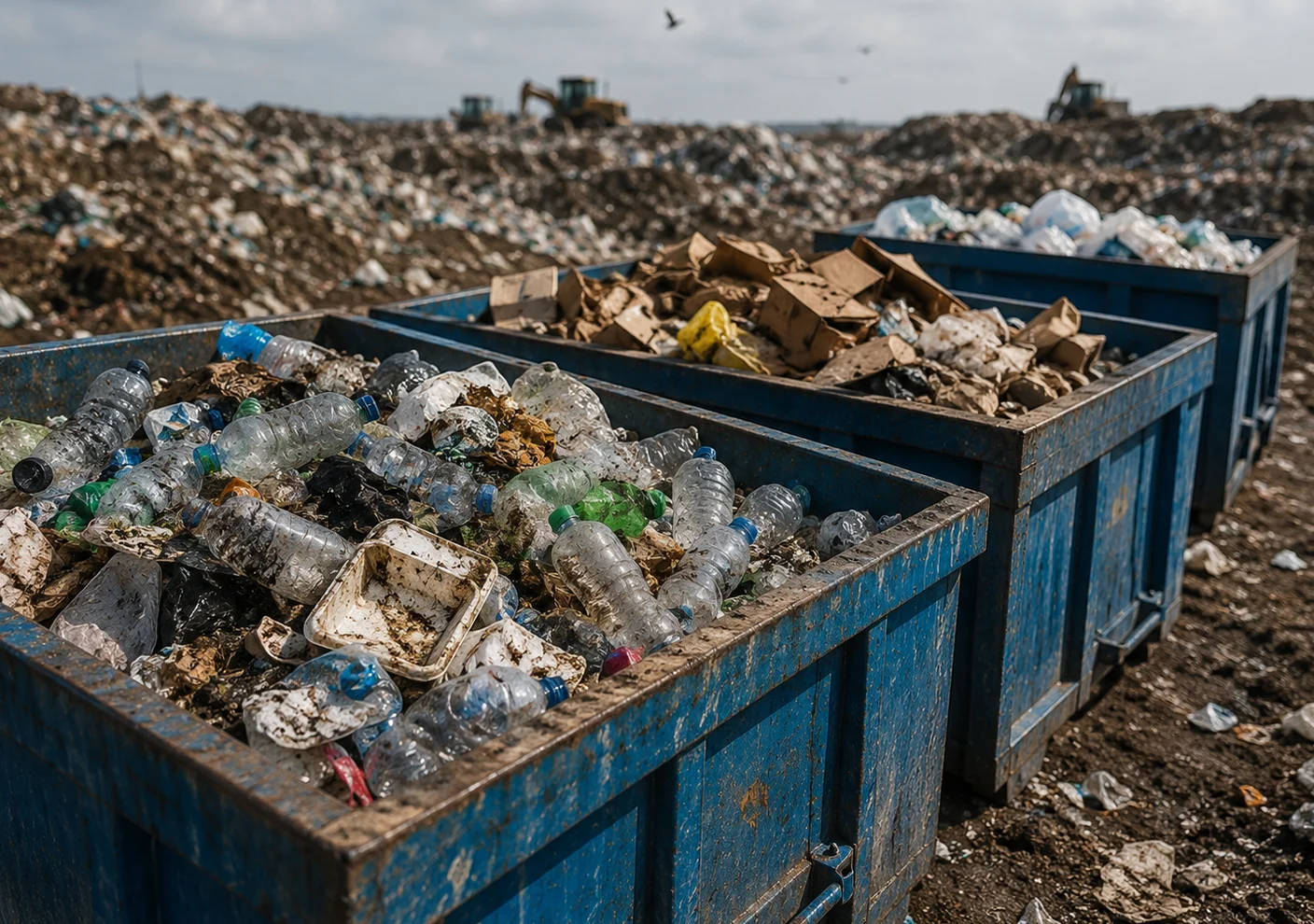
Waste contamination is one of the most common and expensive problems faced by multifamily properties and commercial buildings in California. What many property managers do not realize is that mixing trash, recycling, and compost incorrectly can directly lead to financial penalties, increased operational costs, and compliance risks under state environmental regulations such as SB 1383.
In simple terms, contamination happens when non-recyclable materials end up in recycling or compost bins. Even small mistakes—like plastic bags in recycling or food waste in the wrong container can trigger compliance issues during waste audits. Over time, these issues can escalate into fines, service charges, and corrective actions required by local authorities or waste haulers.
What Recycling Contamination Really Means for Properties
Recycling contamination refers to the presence of incorrect materials in designated waste streams. For example, when trash is placed in recycling bins or when recyclable materials are mixed with organic waste, the entire load can be considered contaminated.
In California, waste management systems are highly regulated, especially in cities like San Francisco, Oakland, and San Jose. Local programs and waste haulers such as Recology monitor contamination levels closely to ensure compliance with environmental laws. According to California’s SB 1383 framework, organic waste diversion is mandatory, and properties are required to meet specific contamination thresholds depending on the waste stream.
When contamination exceeds acceptable levels, waste providers may reject loads, increase service fees, or report non-compliance. For multifamily properties, this is not just an environmental issue it becomes an operational and financial problem that affects the entire building.
The most common sources of contamination include:
- Mixed waste in recycling bins
- Food waste in trash instead of compost
- Plastic bags and non-recyclable packaging
- Improper disposal of bulky items
Even small behavioral issues from tenants can create large operational consequences for property managers.
Why Waste Audits Are Becoming More Strict in California
Waste audits are a key part of California’s compliance system. These audits are conducted to evaluate how well a property is separating waste and whether it meets environmental standards.
During an audit, inspectors review dumpsters, recycling bins, and compost areas to identify contamination levels. If a property fails to meet requirements, it may receive warnings or corrective action notices. In some cases, repeated non-compliance can escalate into formal penalties.
For property managers, this creates a constant operational pressure. Waste systems must be monitored continuously, not just occasionally. This is especially important for large multifamily communities where tenant behavior is unpredictable and waste volume is high. Because of this, many properties are now shifting toward operational support models that include on-site sorting, monitoring, and ongoing compliance assistance instead of relying only on waste haulers.
How Reuseo Helps Reduce Contamination and Avoid Fines
Reuseo supports multifamily and commercial properties by implementing structured waste operations designed to reduce contamination and improve compliance. Instead of reacting to problems after they happen, Reuseo focuses on preventing them through daily operational control.
Our teams work on-site to sort waste correctly, maintain clean and organized waste areas, and monitor contamination levels before they become compliance issues. This reduces the risk of fines, lowers unnecessary hauling costs, and improves overall operational efficiency.
In addition to field operations, Reuseo provides account management and performance oversight, helping property managers maintain consistent waste systems aligned with California regulations such as SB 1383.
By combining operational execution with compliance support, properties achieve:
- Lower contamination rates
- Reduced risk of fines
- More efficient waste operations
- Cleaner and better-maintained waste areas
Ultimately, the goal is simple: turn waste management from a recurring problem into a controlled operational system.
How Properties Can Reduce Contamination
Reducing contamination starts with creating a system that makes proper waste separation easy and consistent.
Clear signage, organized waste areas, and regular monitoring are among the most effective ways to improve recycling performance. Properties that establish clear processes typically experience fewer contamination issues and more efficient waste operations.
On-site sorting services can also provide an additional layer of quality control. By identifying incorrectly disposed materials before collection, properties can improve diversion rates, reduce landfill waste, and support compliance with local regulations.
Equally important is maintaining clean and organized waste areas. Residents are more likely to follow recycling guidelines when waste facilities are well maintained and easy to understand.
Ultimately, successful waste management is not achieved through a single initiative. It is the result of consistent operational practices, ongoing oversight, and a commitment to continuous improvement.
From Minor Problem to Financial Risk
Recycling contamination is no longer a minor operational issue it is a regulatory and financial risk for properties across California. As enforcement becomes stricter, property managers must adopt more structured and proactive waste management strategies.
Companies that fail to address contamination consistently will continue facing higher costs, compliance risks, and operational inefficiencies. Those that invest in proper waste systems and on-site support will not only avoid fines but also improve long-term property performance.